05 // The Control Problem


WHY THE 1980s PROGRAMS FAILED
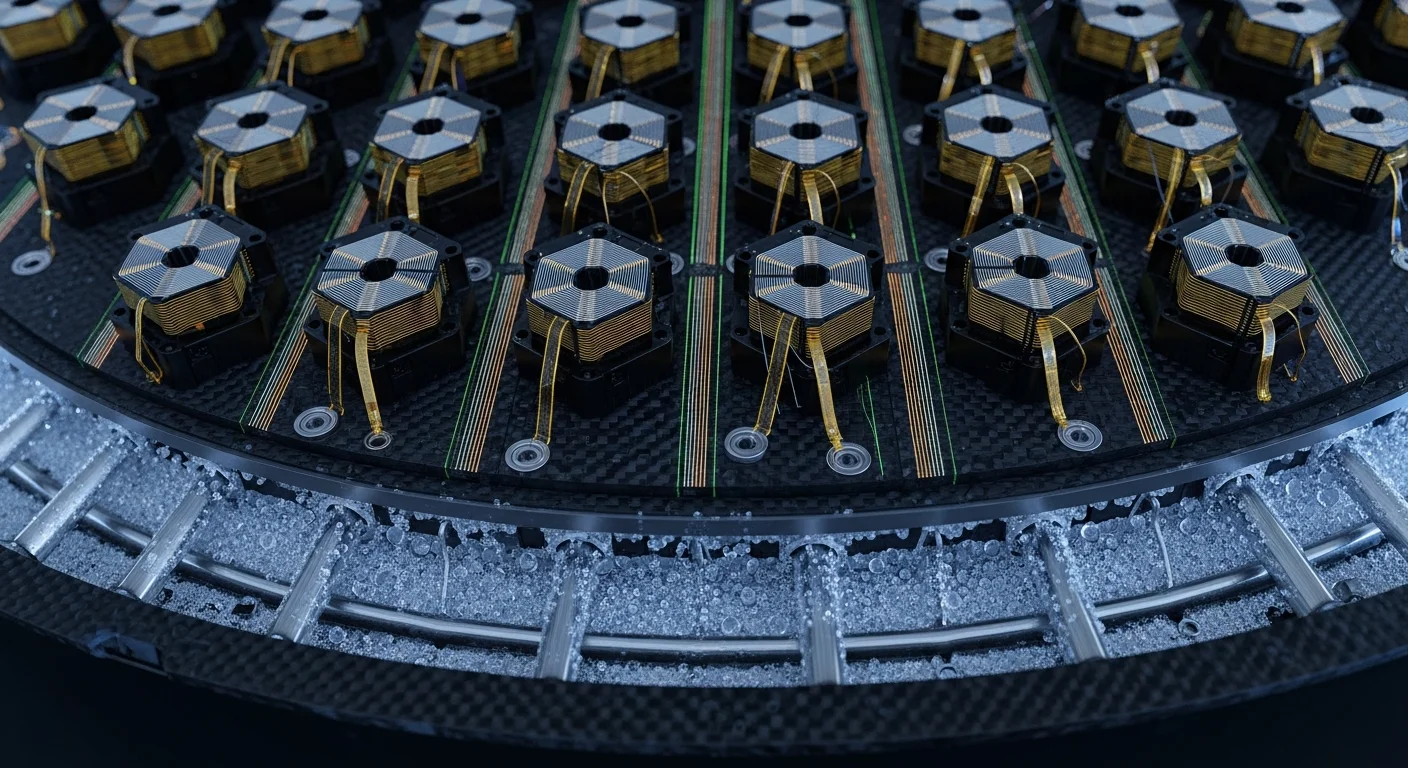
FIG 5.0: FIVE-LAYER CONTROL ARCHITECTURE — DEFENSE IN DEPTH
The plasma soliton is a conditionally stable equilibrium. It is stable against small perturbations if and only if the control system responds faster than the perturbation grows. This is not the stability of a ball at the bottom of a bowl. It is the stability of a ball on a saddle point — stable along some axes, unstable along others, requiring continuous correction to remain in place.[20]
The kink mode — a rigid displacement of the entire flux tube — is the most dangerous instability. Its growth rate is set by the Alfvén transit time:
$$\gamma_{\text{kink}} \approx \frac{v_A}{r} \approx 10^5\text{ s}^{-1}$$
Growth time: 10 μs. In 30 μs the kink displacement has grown by a factor of twenty. In 50 μs the bubble geometry has distorted beyond the linear regime and reconnection events destroy the soliton topology. The ballooning mode — high-wavenumber curvature-driven perturbations at the sheath boundary — is faster still: growth time approximately 1.4 μs for millimeter-scale modes.[20]
This is why reactive control fails. A sensor detects the perturbation: 1–2 μs. The FPGA computes the correction: 0.5–1 μs. The actuator responds: 1–2 μs. Total latency: 3–5 μs. In that time the kink mode has grown by 35–65%. The correction may be insufficient. The bubble collapses.
This was the failure mode of every early program. They had the physics. They had the power — nuclear reactors small enough to fly existed by the 1960s. They had superconducting magnets. What they had was a single control band: 500 kHz magnetostrictive actuation driven by analog feedback. One line of defense against a problem that requires five. The bubble formed. It generated thrust. Then it collapsed — randomly, catastrophically, with no systematic way to predict or prevent it.[1]
Predictive control changes the arithmetic. Instead of responding to a perturbation that has already grown, the control system maintains a running model of the bubble state and propagates it forward in time — 50 to 100 μs into the future. Growing modes are identified before they reach observable amplitude. Corrections are issued preemptively. The effective latency is negative: the correction precedes the event it is correcting.
The five-layer control architecture provides defense in depth across all instability timescales:
| LAYER | MECHANISM | TIMESCALE | FUNCTION |
|---|---|---|---|
| 0 | DC field (primary coils) | Seconds–minutes | Sets global topology. Not a feedback layer. |
| 1 | ROM predictive model | 1 μs | Propagates bubble state 100 μs forward. The brain. |
| 2 | Trim coils (1,224 segments) | 1–10 μs | Fast electromagnetic correction. Modes > 80 cm wavelength. |
| 3 | Terfenol-D (500 kHz PLL) | 2 μs | Soliton breathing mode lock. Stability + thrust simultaneously. |
| 4 | THz sheath patches (512) | 0.1–10 ns | Ballooning mode suppression. Sub-millimeter spatial control. |
The layers are not independent. Layer 4 suppresses small perturbations before they grow to scales where Layer 2 is needed. Layer 2 handles medium-scale modes before Layer 3 must respond. Layer 3 maintains the bulk soliton geometry that all other layers operate around. Layer 1 coordinates everything by providing forward-looking state estimates and optimal correction targets. Multiple failure modes must occur simultaneously for a collapse to happen.
The 500 kHz breathing mode is not just stabilized — it is exploited. Asymmetric phase control of the breathing mode on the fore versus aft hemispheres deforms the bubble from spherical toward the geometry required for thrust. The breathing mode is simultaneously a stability hazard to be controlled and a control input to be commanded. This dual role is the source of the 500 kHz system’s efficiency — the same actuation that keeps the bubble alive also steers the craft.
AI-assisted stabilization is the current frontier. The reduced-order model at Layer 1 is classical control theory — Kalman filter for state estimation, quadratic optimization for control allocation. The next generation adds a learned model layer: a neural network trained on thousands of hours of simulated and real bubble dynamics that predicts instability onset better than the physics-based model alone. DeepMind demonstrated this approach on the TCV tokamak at EPFL in 2022, maintaining plasma configurations that no conventional controller had achieved. The plasma is different. The control problem is structurally identical.[21]
| TECHNOLOGY | 1980s | 2025 | IMPACT |
|---|---|---|---|
| FPGA | 5 MHz DSP, ~10&sup7 ops/s | 10¹² ops/s | ROM and Kalman filter require 10¹¹+ ops/s |
| THz GYROTRONS | Full-rack lab instruments | Thumb-sized, 48V, 50W | 512 embedded in 200 m² hull |
| Bi-Mg METAMATERIAL | No fabrication pathway | AAO template + e-beam litho | THz plasmonic sheath control |
| REBCO TAPE | Low-T superconductors | 500 A/mm² at 20T, 20K | 20+ Tesla with quench margin |
The physics was always there. The materials and the computation were not. The window opened between 2010 and 2020.