03 // The Smart Hull


NOT A CONTAINER — AN ANTENNA
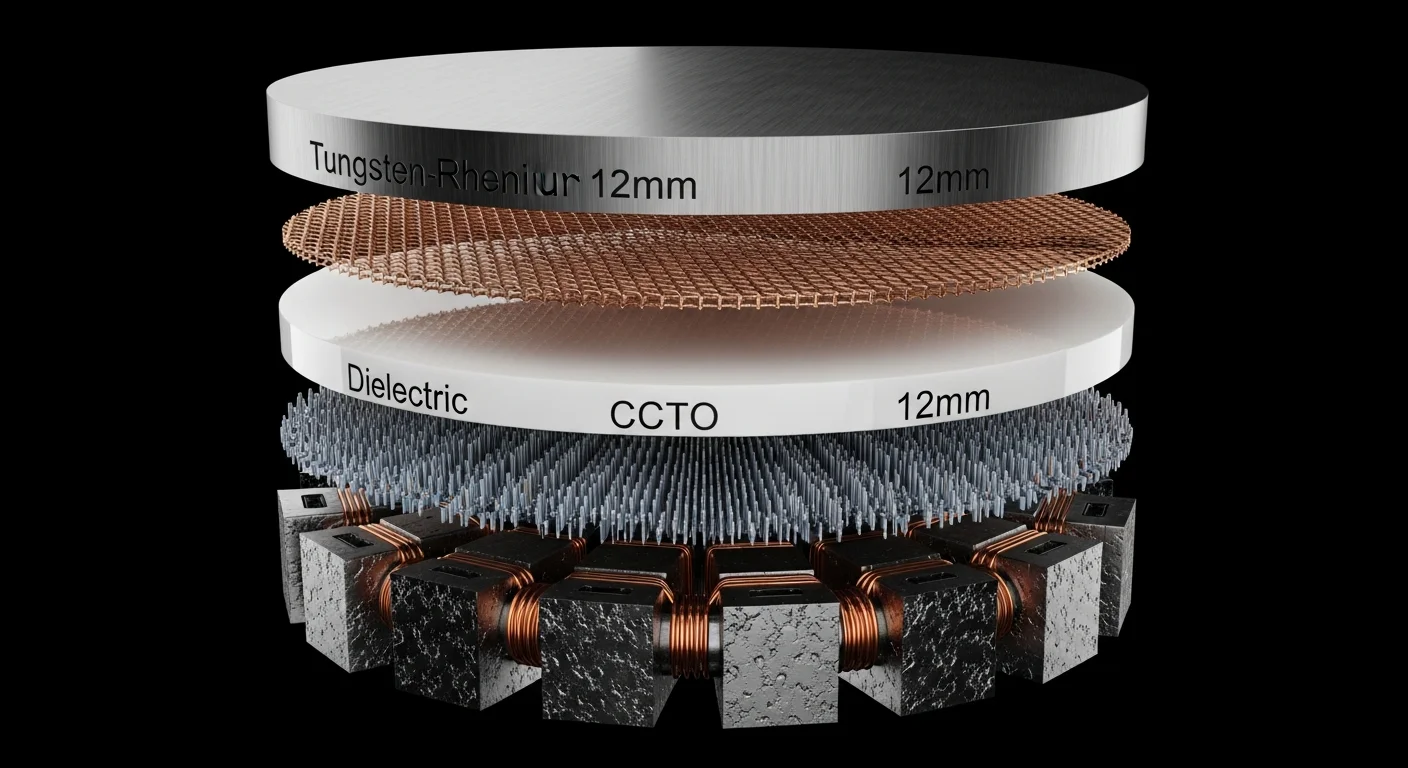
FIG 3.0: FIVE-LAYER HULL — EVERY SQUARE CENTIMETER PARTICIPATES IN PROPULSION
Every aircraft hull ever built is a passive barrier. Aluminum on a 737. Carbon fiber on a 787. Titanium on an SR-71. The material changes with the environment. The function does not. The hull keeps the outside out and the inside in.
The XR-1 hull is the propulsion system. It generates the magnetic field. It sustains the plasma. It carries the THz control signals to the sheath boundary. It manages the thermal load. It delivers seed gas to the ionization front. It does all of these things simultaneously, in the same material volume, fabricated as a single continuous structure with no joints, no fasteners, and no discrete component boundaries. Understanding it requires understanding each of its five functional layers and the systems embedded within them.[11]
Layer 1: Erosion and thermal protection. The outermost surface survives direct contact with the Debye sheath. Tungsten-rhenium alloy tiles at thermal hotspots — the equatorial region where field intensity peaks, the plasma injection ports where local density is highest. The remaining surface is triazite-alloy — a hafnium-niobium-carbon refractory developed by Metallic Sciences for the XR-1 program. Triazite was selected over nickel superalloys because nickel produces unacceptable eddy current losses at THz operating frequencies. The radiation load at the hull surface is 2–5 kW/m² from bremsstrahlung and line emission — significant, but well within the thermal budget of refractory metals.[12]
Layer 2: Electromagnetic ground plane. A 3 mm copper-clad mu-metal composite — six alternating layers of electrodeposited copper and mu-metal ($\mu_r > 50{,}000$). Three simultaneous functions: defines the electromagnetic boundary condition for the active layers below, provides structural load transfer, and attenuates the DC field from the superconducting coils to protect the magnetostrictive layer from saturation.
Layer 3: CCTO dielectric. Calcium copper titanate — CaCu&sub3Ti&sub4O&sub1&sub2 — with relative permittivity exceeding 100,000. The extreme permittivity enables near-perfect electromagnetic coupling between the hull surface and the Debye sheath: coupling coefficient $\kappa \approx 1 - 2/\varepsilon_r \approx 0.99998$. The hull and the sheath are electromagnetically fused — perturbations in hull surface charge produce immediate, lossless perturbations in sheath charge. Functionally graded from $\varepsilon_r = 10{,}000$ at the ground plane to $120{,}000$ at the metamaterial interface to eliminate THz reflection at the boundary.[13]
Layer 4: Bi-Mg metamaterial. One hundred micrometers of bismuth nanowires in a magnesium matrix — the THz waveguide that carries control signals to the sheath. Bismuth is a semimetal with anomalously low carrier density ($3\times10^{23}$ m$^{-3}$, five orders below copper) and low effective mass ($m^* \approx 0.001\,m_e$), placing its plasma frequency at approximately 500 GHz — squarely in the THz band. Surface plasmon polariton modes propagate along the Bi-Mg layer at THz frequencies, carrying sheath control signals from the 512 hull-embedded gyrotrons to sub-millimeter spatial resolution at the plasma boundary. Conventional metals support SPPs only at optical frequencies. Bismuth is the THz plasmonic medium. Graphene — gate-tunable, atomically thin, with 3× the carrier mobility — is under development by Plasma Press for the Block 2 hull.[14]
Layer 5: Terfenol-D magnetostrictive layer. The innermost active layer. Tb&sub0·&sub3Dy&sub0·&sub7Fe&sub2 — the highest-performance magnetostrictive material known, developed at the Naval Ordnance Laboratory in the 1970s. Magnetostriction coefficient: 1,200 ppm pre-stressed, producing 10–20 μm mechanical displacement per actuation cycle. The 500 kHz control system modulates current in dedicated coils, driving the Terfenol-D layer into mechanical oscillation that couples through the CCTO and ground plane to modulate the soliton field geometry at the MHD breathing frequency. This is the bulk actuator — the low-frequency, high-authority correction layer.[15]
Embedded within and between these five layers: a lattice of 1,440 REBCO superconducting coil segments operating at 20 K, wound from Highfield Magnetics second-generation tape carrying 500 A/mm² at fields up to 20 Tesla. The coils are arranged in three hierarchies: 24 primary coils (800 mm diameter) establishing the global toroidal field topology with approximately 2 GJ of stored magnetic energy; 192 secondary coils (200 mm) providing asymmetric field geometry for thrust vectoring; and 1,224 trim coils (50 mm) operating at up to 10 kHz for fast stabilization. Cryogenic cooling is supplied by Phase Flash superfluid helium loops circulating through microchannels in the structural substrate.[16]
Also embedded: 12,000 seed gas capillary channels (0.3 mm diameter, drilled by Foundation Kinetics Scarab micro-robots), 32 Thomson scattering diagnostic fiber terminations for real-time plasma characterization, and the thermal management channels that remove waste heat from the actuation chain. The hull is fabricated as a single continuous structure by Foundation Kinetics’ Arachne-7 Weaver — a 24-robot system that builds the hull from raw feedstocks over approximately 18 months. No rivets. No joints. No seams.